Most people book an insert to cut smoke. The flue it will vent through is usually decades old, has carried wood smoke the whole time, and has rarely been seen from the inside. Before a new appliance is tied to that flue, it pays to know what shape it is in. This post covers why the national chimney standard treats a change of appliance as a reason for a deeper inspection, what that inspection costs with Toller Chimney Experts in Compton, and what you get back.
A change of use is the trigger
NFPA 211 is the national standard most chimney work in California follows. It sorts inspections into three levels by how much of the system is examined. The deciding question is not the age of the chimney but what is about to happen to it.
If you are going to keep using the fireplace exactly as before, the lightest level is usually enough. When the use changes, the standard asks for the middle level. Changing use covers the jobs our clean-burning customers book most:
- closing an open fireplace with a wood or gas insert;
- switching from wood to gas logs or a gas insert;
- swapping an old wood stove for a newer one on the same flue;
- relining a flue, which changes its size and the way it draws.
The reasoning is simple. A new appliance sends different heat and different exhaust up the flue. A crack that did no harm with an occasional wood fire can leak gas combustion products into the attic once a gas insert runs for hours. A deeper look before the work means the liner and the insert are sized for a flue that is known to be sound.
What the deeper inspection looks at
A Level 2 chimney inspection with us is $395. It includes everything on our basic check, then goes further:
- a camera fed down the full height of the flue, recording the tile joints, any cracks, gaps or missing mortar, and deposits that hide the wall;
- the parts of the chimney you can reach from inside the house without opening walls, such as the attic where the chimney passes through, and a crawl space where the house has one;
- the clearances between the chimney and any wood framing around it;
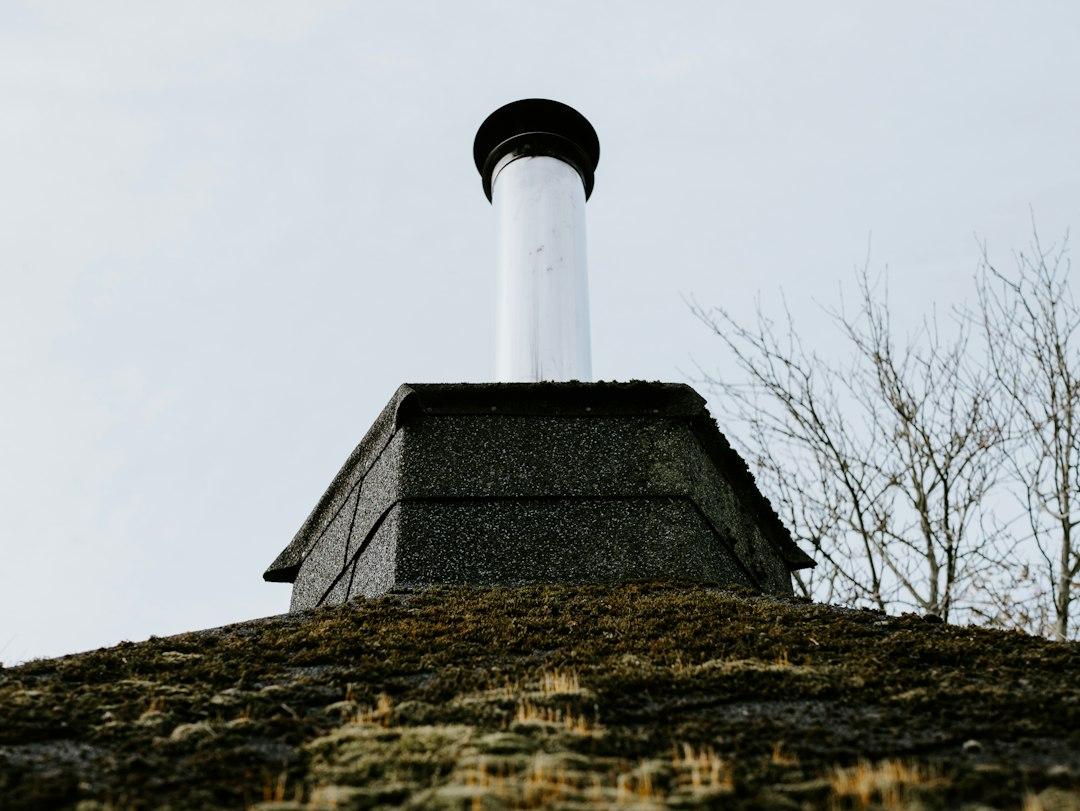
- the roof top: crown, cap, flashing and the brick above the roofline.
You get a written report with still images taken from the recording, each with a short note on what it shows and what it means for the appliance you plan to fit.
How the result shapes the insert quote
The report decides the next step, and that is why it comes first.
- Sound flue, right size. The insert goes ahead as quoted, with a liner sized for the unit.
- Cracked or offset tiles. The insert still goes ahead, but the liner becomes a must rather than a choice, and it has to run the full height. The chimney liner page covers that work.
- Masonry trouble at the top. A failing crown or loose brick above the roof is repaired before the insert, because a new unit should not vent through a chimney that is letting water in.
- Clearance problems. Wood framing too close to the chimney is a fire risk with any appliance, and the fix is quoted before anything else.
The insert price we publish, $2,800 to $5,650 for a gas unit fitted to an existing fireplace, assumes a flue that can take a liner. The Level 2 is how we confirm that before you commit.
Book the inspection first
If an insert or a fuel change is on your list, booking the Level 2 is the next step, and the insert quote follows from its findings. Use the request form and tell us what you plan to fit, how old the house is, and whether the fireplace has been used recently. We may ask for a picture of the hearth when we call you back.
When the lighter check is enough
Not every visit needs the camera. If the fireplace is staying as it is and you want to know whether it is safe for another winter, a Level 1 inspection at $55 covers what can be seen from the firebox, the roof and the rooms. If that check turns up something it cannot explain, such as a stain that suggests a leak or a smell that suggests a crack, the report will say a Level 2 is the next step.
Two other moments point straight to the Level 2: a sale, where the buyer, the seller and both agents want a record of the flue, and anything that may have shaken or overheated the chimney, such as a quake or a fire in the flue. Our home sale inspection page covers the first.
The third level
The deepest level opens parts of the building, such as a section of wall or the chimney chase, to reach what the camera could not. It is rare, and we only suggest it when the Level 2 finds a problem that cannot be judged any other way. The cost depends on what has to be opened and is quoted in writing after the Level 2 report.
Why this fits a cleaner fireplace
An insert is meant to cut the smoke your house sends into the room and the street. A flue with gaps does the opposite: it can push exhaust into the attic or the walls, where nobody sees it. Inspecting first keeps the cleaner fireplace clean all the way up.
Booking in Compton
We run Level 2 inspections across Compton, South Gate, Downey and Lakewood, for owners planning an insert and for sales. Toller Chimney Experts sends the report to you, and to anyone else you name. To set up the visit, head to our contact page.
Ready for a Cleaner-Burning Fire?
Toller Chimney Experts sweeps flues, repairs wood and pellet stoves, and fits inserts and gas logs, with the findings and any price set down in writing. Book from Compton, South Gate, Downey, Lakewood or a town nearby.